"Red Mountain" series: 1920s to 1966
(This series was renamed "Century Cookware" in the early 1950s.)
Birmingham Stove & Range began producing "hollow-ware" for Atlanta Stove Works as early as 1902, and for over twenty years they produced a series of pans that are largely unknown because they didn't have any markings that positively identified them. But in the 1920s, ASW began a new line of stoves and cookware called the Red Mountain line, which was named after the iron-rich Red Mountain area of Birmingham. Beginning around they 1930s they produced a series of cast iron skillets for their stoves and dutch ovens that were still inexpensive but high quality in design, ranging in size from #3 all the way to #14. A great deal of the production of these pans was done by hand, and the first series of Red Mountain pans are described as handwritten or hand-scribed, because the size number and mold ID letter was etched onto the patterns for their molds by hands.
The period after World War II was when Atlanta Stove Works greatly expanded their production, and they began producing new products including gas heaters and lawn furniture. Also during this time, the production of their cast iron cookware was upgraded to more automated manufacturing equipment, using a manufacturing process called "jolt and squeeze." This upgrade allowed Birmingham Stove & Range to greatly increase the number of cast iron pans they produced, and they had a more professional look with a standard marking showing the size number and mold ID letter for each pan.
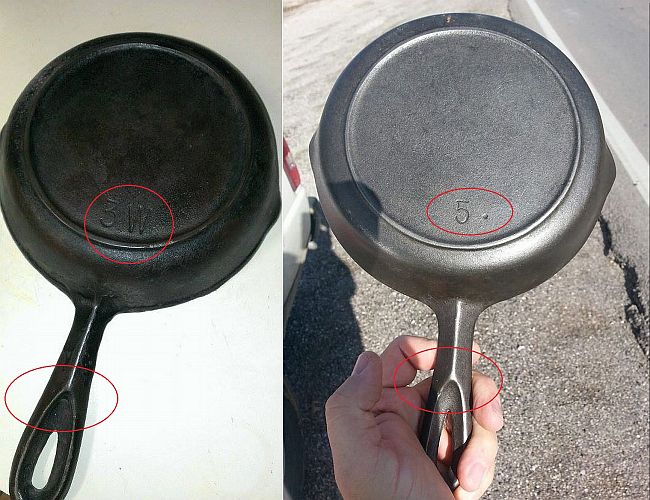
The first series of cast iron pans produced by Birmingham Stove & Range had very few markings on the underside. As seen in the photos above, they had a prominent heat ring, and the distinctive teardrop-shaped hanging hole on the underside of the handle. However, as these photo show, the only identification stamps used were a large number and a letter, such as the ones on the pans shown above: 3 W and 5 . (5 plus a dot). The number indicates the size of the pan – in this case, the number 5 indicates it is a size 5 pan. The letter W on the left photo is a mold marker, and it could be lettered A through Z. This indicated exactly which iron mold was used to cast the pan, and it assisted with easy identification if pans began showing flaws as the molds wore out or cracked from use. A few pans had a dot after the size number, instead of a pattern letter, as shown in the photo above; though these pans were unusual and not regular.
These photos show a #8 sized Red Mountain skillet, with a manufacturing date estimates from between the 1940s to the 1960s. The font style of the letter indicates this pan was made after BS&R standardized their size markings and no longer wrote them by hand onto the patterns used to make their molds. This likely happened during the 1930s, and almost certainly by the 1940s. BS&R continued to mark their pans with these size number after they renamed their cookware line to "Century Cookware" in the early 1950s, and they produced these pans all the way to the 1960s.
Click for larger image:
https://i.imgur.com/aVNFUla.jpg
Click for larger image:
https://i.imgur.com/YC2B5zO.jpg
Click for larger image:
https://i.imgur.com/XShOlUP.jpg
Click for larger image:
https://i.imgur.com/4KbhrpG.jpg
This original label shows that BS&R added a sticker to their pans, even though they did not include their own name on the pan itself. The original Red Mountain label is very rare, and it's believed many pans did not have the label attached. BS&R shipped them in boxes to retailers, and the company label was only on the shipping box.
.jpg "image title")

The Red Mountain #14 size differed from all of their smaller skillets in one aspect: it did not have the angled ridge on the underside of the handle. The most likely reason for this was the design was simply too big to fit into the pattern used for casting, and it resulted in a pan that had to have the handle with a more curved surface, without the tradenmarked ridge shape. The #14 skillet was produced in this style until the introduction of DISA automated manufacturing in the late 1960s. The new machines were able to produce molds with the ridge on the underside of the handle.
However, for several years the largest skillets (size 12 and 14) continued to have only a size number of 12 or 14, without the NO. descriptor added to all of BS&R's smaller pans. They finally changed the size to NO. 12 and NO. 14, with a size measurement in inches, in the early to mid 1970s.
Red Mountain #14 A skillet, with letter A mold ID and a handle with a flat underside.
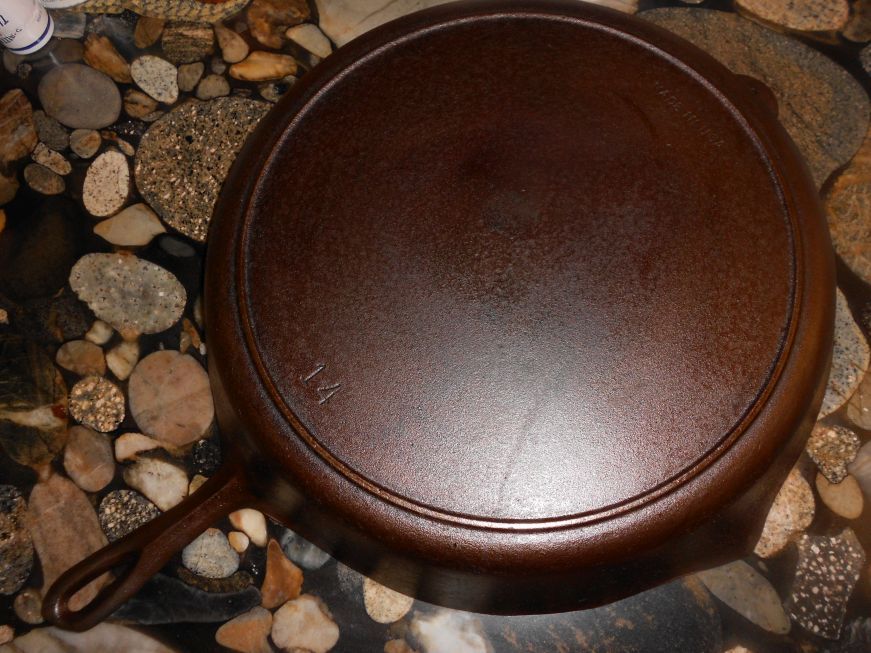
Century #14 skillet, with a size number of 14 and no mold ID letter. The underside of the handle has the trademarked ridge shape.
"S Series" Red Mountain Pans
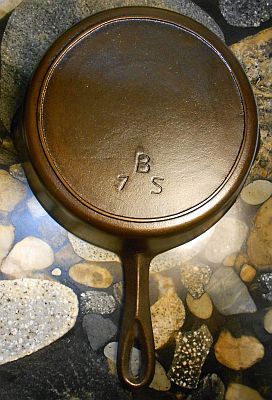
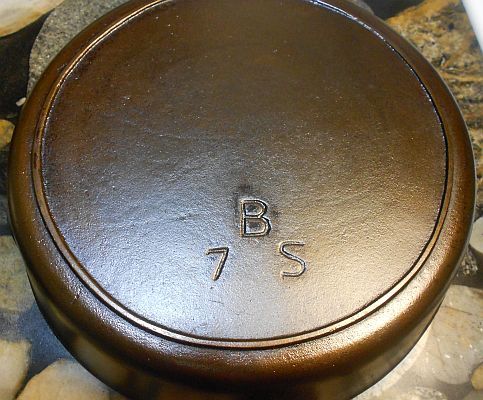
The Red Mountain series included a set of three skillets of an unusual size. These pans were marked with size numbers of 3-S, 5-S and 7-S. These pans are slightly smaller than other Red Mountain skillets of the 3, 5, and 7 sizes. This makes them of interest to BS&R collectors, though otherwise they are exactly like other skillets of the Red Mountain series.
Photos: 3-S by William Dallas; 5-S by Scott Newman; 7-S by Paul Rush Reed.
"Veri Similitude" wrote on June 4, 2015: "We don't know yet what S stood for or why they were made. So far we've captured 3, 5 and 7 in the wild. The 5 was made from a 4 and the 7 from a 6 so you will often see those with ghosted 4 and 6 marks. My theory is a special portable stove was made, but we really don't know." Later, the question of "why" the S series was made produced this remark: "To compete with another foundry. They made a camping set that featured a smaller size to complement that camping set." (Jason Walker, April 19, 2016)
"Handwritten" Red Mountain Pans
Posted to the Cast Iron Cooking group on February 19, 2014 by Chris St. John: "And finally what appears to be another Red Mountain series, marked 5 Bx, and another marked 8Y. But notice that the marks are obviously scrawled by hand, rather than printed like the other Red Mountain." A number of these pans have appeared in the hands of collectors and cast iron enthusiasts. While much of Atlanta Stove Works' production records from its early days have been lost, speculation on the Facebook group for Birmingham Stove and Range came to a reasonable conclusion that these may be among the "first series" of Red Mountain pans, produced during the 1930s or possibly even earlier. The hand-etched molds may have been produced before the size numbers were standardized and permanently added to the design of the mold.
BS&R began using the name "Red Mountain" on their stoves in 1922, and they filed for a trademark on the "Red Mountain" cookware name in 1926. Their stoves were the primary product and the cookware was meant to supplement the stoves, and it's believed the earliest "handwritten" pans were produced for their stoves during this time. I personally would think the "handwritten" series continued to around the 1930s, and after that they used stencils to put the more familiar large, rounded letters on their pans.
.jpg "image title")
.jpg "image title")
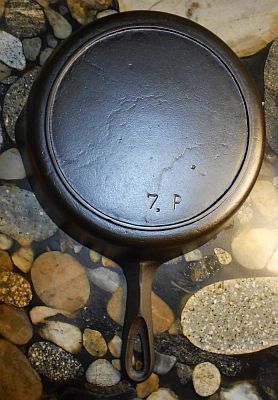
These photos show a close-up comparison between a Birmingham Stove & Range "handwritten" Red Mountain skillet and a special "S series" Red Mountain. The handwritten markings on the bottom indicate both of these pans are from the same approximate time period, 1920s to 1930s, though there could be as much as ten years' difference or so between the two. The 7P skillet has casting flaws on the bottom that appear to be cracks, but close examination shows the skillet is intact and will cook just fine. The 7-S also has a B mark, which likely indicates a mold ID in the same way the 7 has a mold ID of P. The 7-S is identical in size to a number 6 Red Mountain skillet (8 11/16 inches, according to the Red Mountain catalog), while the 7 is 9 5/8 inches in diameter, or exactly 1 inch smaller than a size 8 skillet.
.jpg "image title")

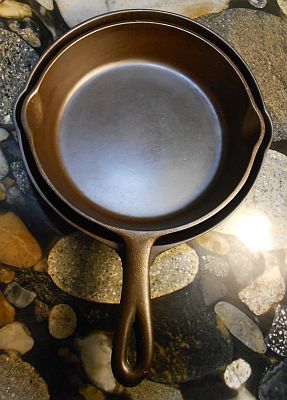
The earliest line of Red Mountain series skillets included pans with size numbers 4, 6, and 9; but these had all been discontinued by the time BS&R upgraded their production to the more automated "jolt and squeeze" manufacturing process (likiely during the mid-to-late 1940s). Pans with these size numbers are rare and have become prized collectors' items...at least among collectors familiar with BS&R pans.
.jpg "image title")


"G Series" Red Mountain Pans
A number of cast iron pans with the markings of the Red Mountain series have been discovered with a double-digit mold ID mark. Almost all of the pans seen in this series have been size 8 (a few have size 7, a couple of #3 sized have been seen), but no other size numbers. Also, they all have the letter G as a mold ID, followed by an additional number. Pans have been seen with marks saying 8 G 1, 8 G 2, 8 G 3, 8 G 4...and some even have a second letter, such as 8 G Z. At this time we don't know why some of these "G series" pans were marked this way. Once again, no documentation or records have been located that provide an explanation of why these pans were marked like this.
The lack of evidence has led some BS&R collectors to make an educated guess, or hypothesis, that these pans may have been the first series of "newer" cast iron pans made when BS&R upgraded their production facility to the more automated "jolt and squeeze" production, at some time in the 1940s. It's possible these pans were all identified with the letter G until the older production equipment was phased out and the newer automated production equipment was used exclusively.


Dutch Oven
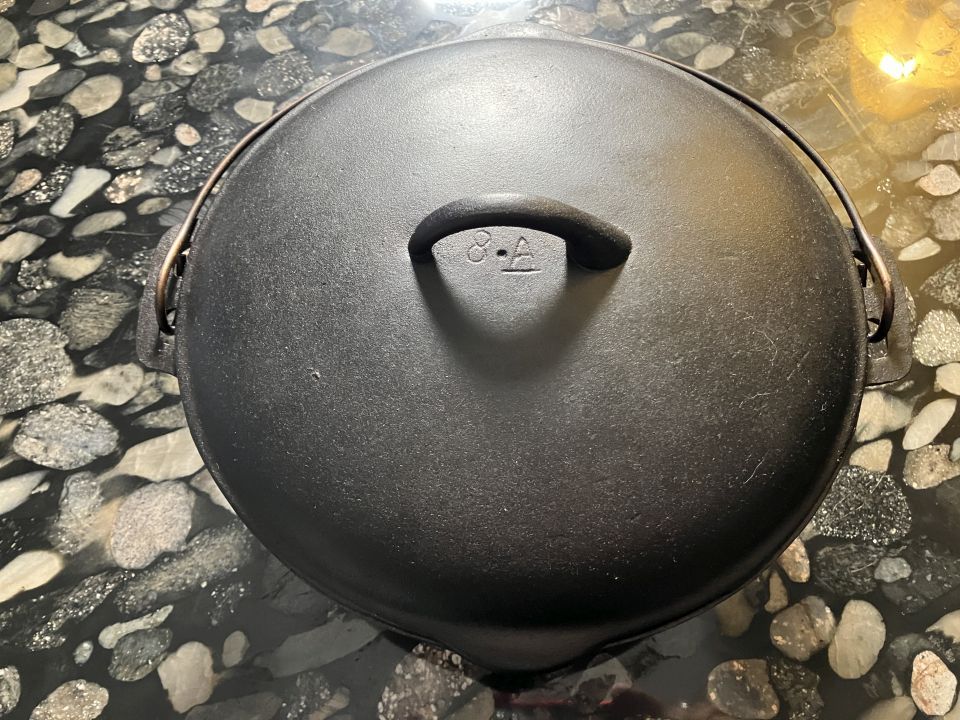
Birmingham Stove & Range produced cast iron dutch ovens for use in the kitchen for the entire life of the company. The BS&R dutch oven was the only cast iron pot from a major manufacturer with a pour spout on the rim: dutch ovens from Lodge, Griswold, Wagner and other manufacturers all had a circular rim without a pour spout. Much like their skillets in the Red Mountain era, the size of the pour spout seemed to vary from one pot to another: some had very small pour spouts, while other had more prominent pour spouts.
Unlike their skillets, BS&R made their dutch ovens with smooth, flat bottoms without a heat ring.
Click for larger image: https://i.imgur.com/DjwoXG2.jpg
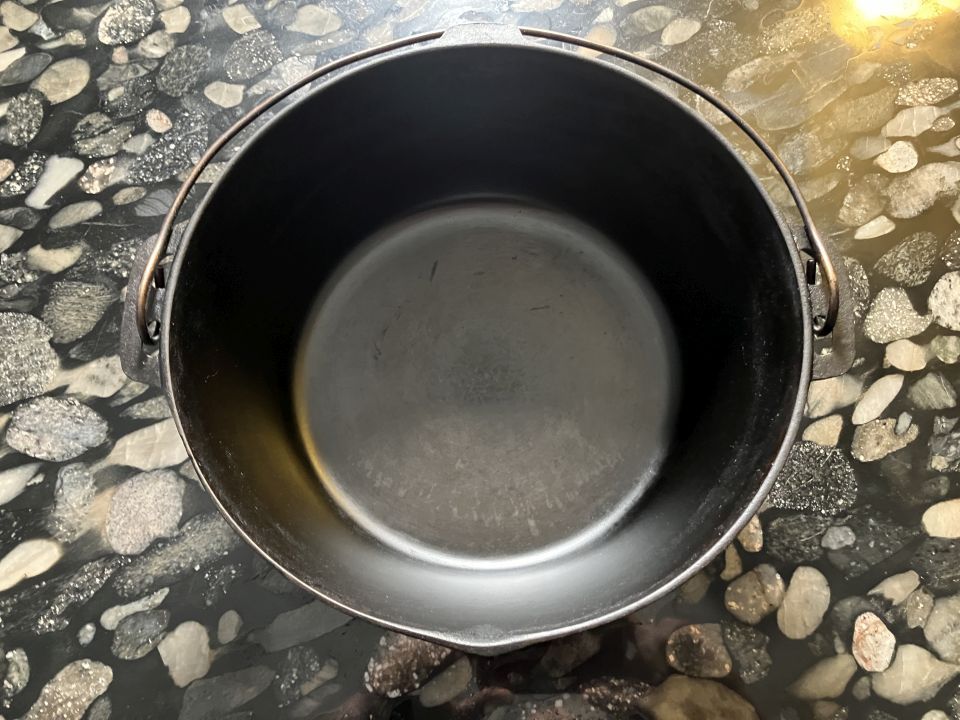
Click for larger image: https://imgur.com/owtUPFv
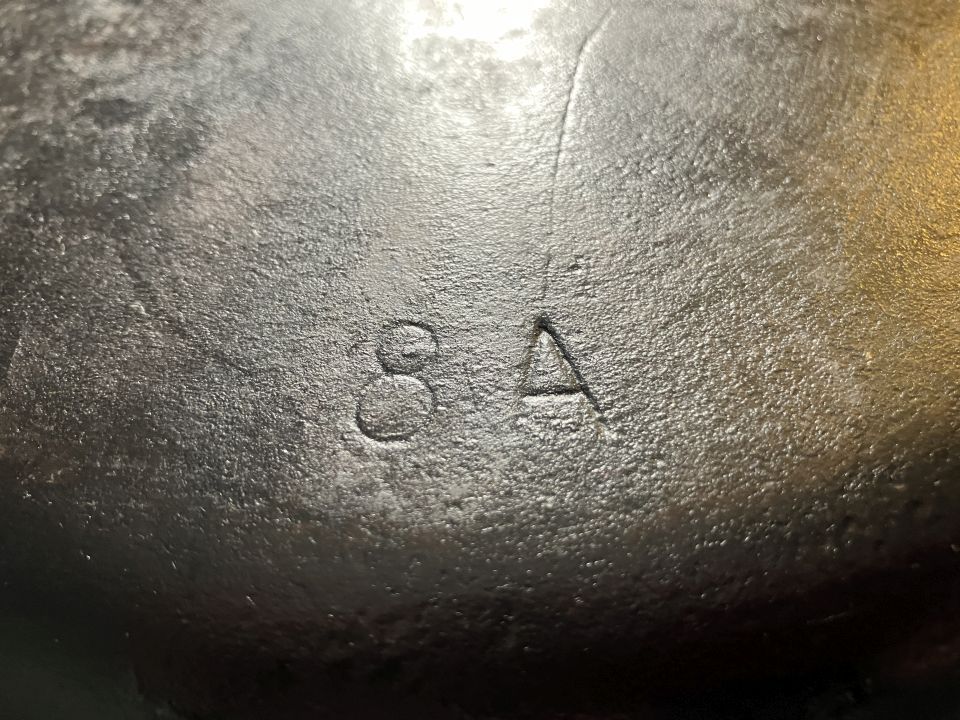
Click for larger image: https://imgur.com/fhzYn4X
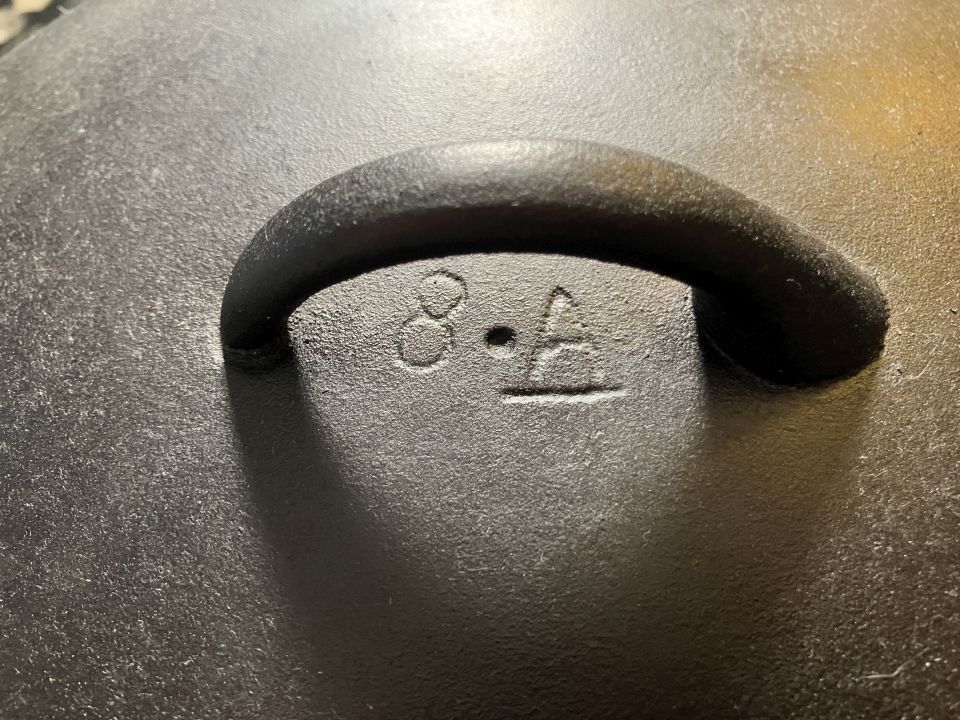
Click for larger image: https://imgur.com/CEz3O2t
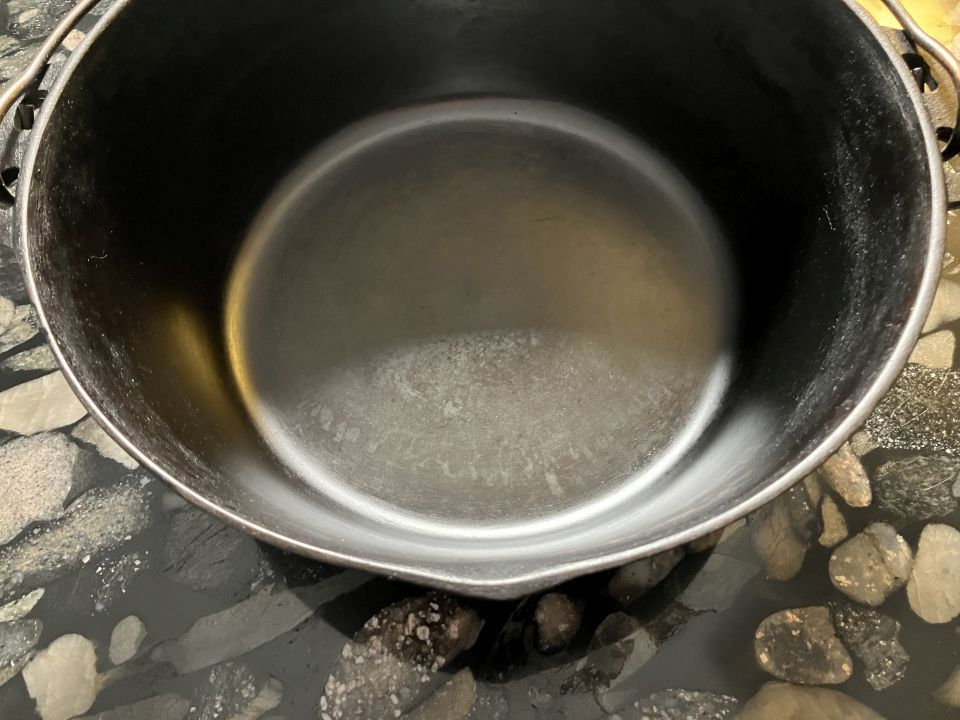
Click for larger image: https://imgur.com/FUpo1Bh
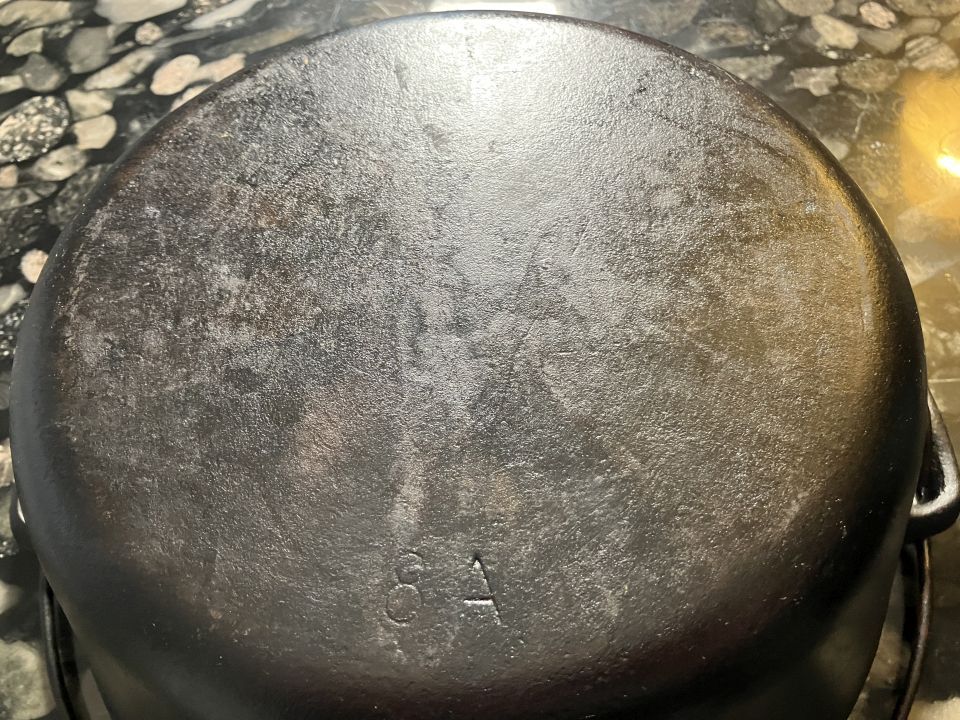
Click for larger image: https://imgur.com/tX10ggo
The dutch oven used the same size numbers as skillets made by BS&R, and the diameter of the dutch oven was exactly the same as the skillet. This allowed the company produce only one model of their cast iron lid, and the lid could fit perfectly on either a dutch oven or a skillet of the same size. The lid had two extensions, or "ears", on opposite sides of the rim. These ears fit over both pout spouts on a BS&R skillet. On a dutch oven, the pour spout was covered by one of these ears on the lid. The other side of the rim had a tab that was covered by the other ear of the lid.
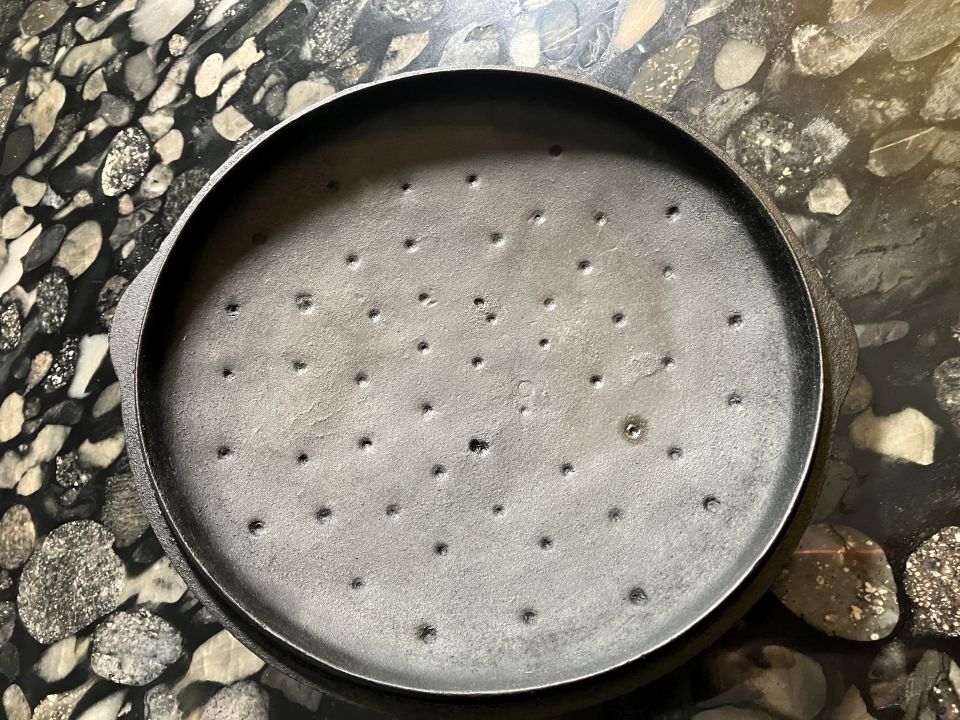
Click for larger image: https://imgur.com/MLbjRlp
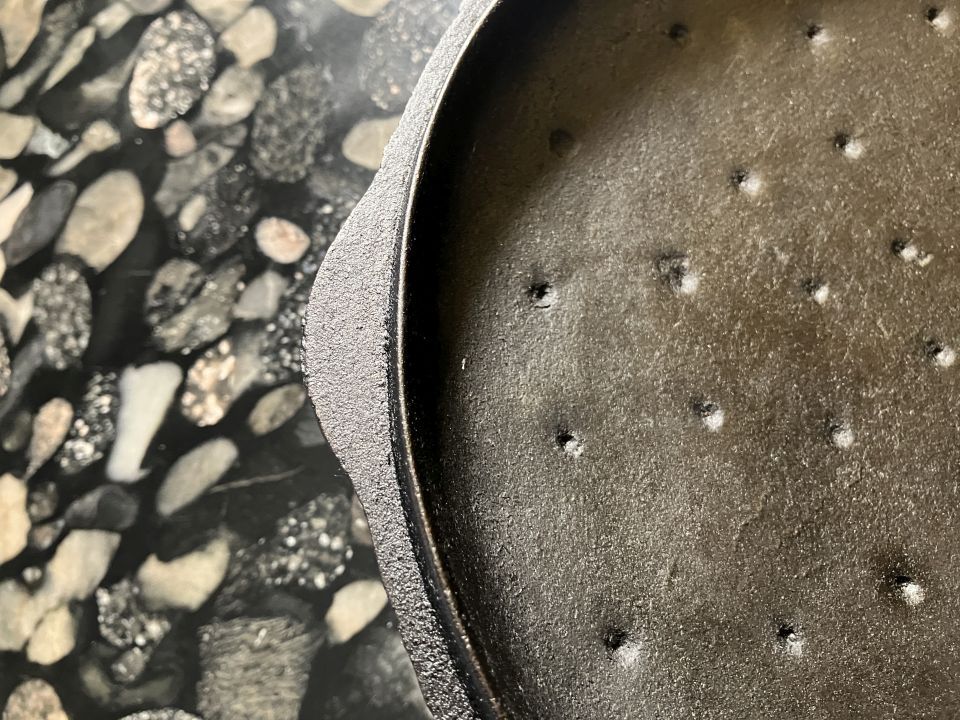
Click for larger image: https://imgur.com/O4myuYt
While BS&R made their skillets in size numbers ranging from 3 through 14 (except for size 11 and 13, which the company never used), their kitchen dutch ovens were only made in sizes 7, 8, 10 and 12. The number 8 Red Mountain dutch oven was by far the most widely produced and sold dutch oven; dutch ovens of sizes 12, 10 and 7 from the Red Mountain series are far less common and much more difficult to find. When BS&R introduced automated production with the Century Cookware series in the 1960s, they produced a large number of dutch ovens in size 12. For several years, these #12 sized dutch ovens only had a size number of 12 marked on the bottom. These dutch ovens are often mistaken for much older Red Mountain series #12 dutch ovens.
.jpg "image title")
The Red Mountain catalog included listings for #6 and #9 sized dutch ovens, though I've never seen photos of these pots on the Internet or elsewhere.
Lids: 1920s to 1966
The handle on top of the lid was intentionally designed with one end larger than the other. As with the Red Mountain series skillets, iron lids of this era had a size number printed on the top, underneath the handle. This particular lid is an 8 F, signifying a size 8 lid cast in mold letter F.
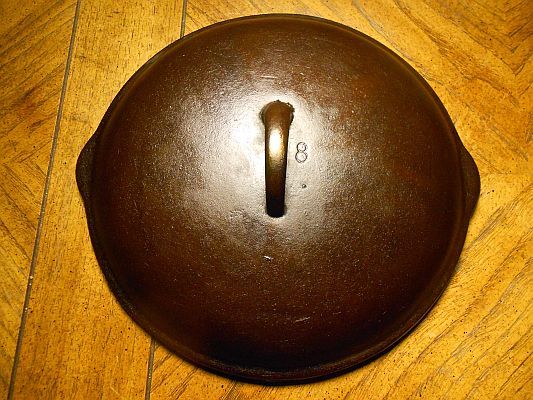
.jpg "image title")
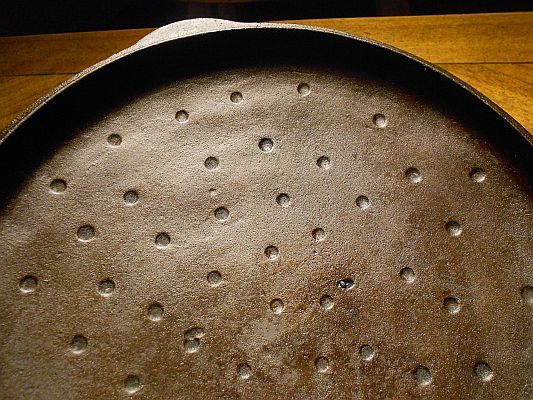
On the underside of the lid, the basting dimples were spaced haphazardly, in a random placement that had no actual pattern. These random dimples are what immediately makes this lid unique as a BS&R Red Mountain series lid.
.jpg "image title")
Corn Bread Pans
Birmingham Stove & Range produced many cast iron corn stick baking pans. What's more, this company can be credited as the first company to produce the popular corn bread skillet, a cast iron pan with eight wedges for individual pieces of cornbread. (This pan can also be used to bake cookies, brownies, and many other delightful foods.) Lodge produced its own imitation of the cornbread skillet shortly after the original was introduced by BS&R; though they added a hole in the center of the pan. When BS&R's designs were acquired by Lodge in the late 1980s, the design and ownership of the cornbread skillet was passed on to Lodge. This pan is sold today as the Lodge wedge pan.
Outdoor Cookware: Camp Ovens and Spiders
For its entire history, from the 1930s all the way through the 1980s, Birmingham Stove & Range produced a series of ourdoor camp ovens and long handled legged cast iron spider skillets. These outdoor pieces were sized differently from their kitchen cookware, and they're far less well known than their indoor cousins. Even today, antique vendors often mistake the BS&R spider skillet for a "19th century cowboy chuck wagon" spider, when in fact it may be as much as 100 years younger than the vendor listing. But as with almost any other piece from BS&R, an ourdor camp oven or spider is a huge, heavy cast iron pot that will last a lifetime.
Sportsman Grill
The Birmingham Stove & Range Sportsman's grill is a rare item, especially the first generation with four legs instead of three. The oval frying pan, originally made and marketed as a fish fryer accessory for the grill, is highly sought after by cast iron enthusiasts. These items were produced for Atlanta Stove Works by Birmingham Stove & Range, beginning in 1941 and throughout the entire history of the company. The Sportsman grill was one of the most popular items produced by BS&R, and today the same item is made and sold by Lodge Cast Iron under the same name: the Sportsman grill or "hibachi."
"Early Century Cookware" or "Later Red Mountain": 1950s to 1966
.jpg "image title")
Photo courtesy of Jason Walker.
The period between the years 1950 and 1966 is a subject of debate (and arguments) among cast iron collectors and historians. During this time, BS&R renamed their entire line of cookware from Red Mountain to Century Cookware, but they continued to produce the exact same cast iron pans. The sizes, markings, and other identifying marks were exactly the same as they had been producing for at least five to ten years since the mid-1940s, or possibly even earlier. However, the pans were now labeled "Century Cookware" and provided to retailers and stores under this name. For a brief period of time, BS&R produced and sold pans under both names. It's possible the company may have continued using their stock of Red Mountain labels until they were depleted. This would mean BS&R sold pans with both the "Red Mountain" and "Century Cookware" labels at the same time for a brief period, perhaps two to three years or so. Eventually the Red Mountain name was phased out completely, and BS&R continued to produce and sell its cookware under the name of Century Cookware until the entire foundry was upgraded to automated production. This was officially started in the year 1966.
An early "Century Cookware" catalog dated 1954 has been made available online, though it may be possible some BS&R pans with "Red Mountain" labels were still being sold at this time.


